

Board Performance · 2025
In this section15 topics
- Compliance Monitoring — Overview1 item
- Prevention of Conflicts of Interest3 items
- Prevention of the Use of Inside Information3 items
- Anti-Corruption4 items
- Whistleblowing3 items
- Selection of Directors & Chief Executives7 items
- Selection of Independent Directors2 items
- Director Development2 items
- Evaluation of Board & Subcommittee Performance3 items
- Subcommittees1 item
- Meeting Attendance & Remuneration4 items
- Supervision of Subsidiaries & Associated Companies4 items
- Board Duty Performance — Overview1 item
- Audit Committee Duty Performance1 item
- Executive Committee Duty Performance1 item
Compliance Monitoring — Overview
Compliance Monitoring — Introduction
The Company places importance on good corporate governance by establishing relevant policies and practices in its Good Corporate Governance Policy, Business Ethics, and Codes of Conduct. It also promotes strict adherence to these principles to build confidence among all stakeholders. Over the past year, the Company has monitored compliance with good corporate governance across all aspects and has provided comprehensive training to employees to instill awareness of corporate governance, business ethics, and codes of conduct.
Guidelines
Supervisors or assigned representatives are required to report non-compliance with corporate governance policies and practices and business ethics to the Company Secretary Department quarterly.
In cases of non-compliance with corporate governance policies and practices, business ethics, and codes of conduct, the Company has measures to penalize offenders according to the severity of the issue, such as verbal warnings, written warning letters, or escalating the matter for management consideration, among others.
Relevant departments define corrective actions and analyze the root causes of the issues, including preventive measures to avoid recurrence in the future.
The Company Secretary Department summarizes the information and reports it to the Audit Committee, and summarizes key issues for reporting to the Board of Directors.
Reporting progress in cases where issues require resolution, by setting a timeframe for the responsible department to report on the status of resolution. Progress reports are submitted to the Corporate Secretary's Office for summarization and reporting to the Audit Committee. Significant issues will be summarized and reported to the Board of Directors in due course.
To ensure the efficiency and effectiveness of the monitoring process for compliance with business ethics and codes of conduct, random checks on compliance with business ethics and codes of conduct are mandated to be conducted by the Corporate Secretary's Office or an assigned department at least once a year.
In the year In 2025, the Company has monitored compliance with the good corporate governance policy and business ethics, covering matters related to:
Environmental care, asset utilization and maintenance, intellectual property management, information and IT system security, employee welfare and non-discrimination, anti-unfair competition, and health and safety within the group of companies. The monitoring results indicate that the Company has fully implemented the guidelines for each issue. Furthermore, neither the Company nor its subsidiaries have any legal disputes that significantly impact the Company's business operations or any negative impacts that could affect the assets of the Company or its subsidiaries by more than 5% of shareholders' equity as of December 31, 2025, nor are there any legal disputes not arising from the normal course of business of the Company or its subsidiaries.
Additionally, the Company also monitors compliance with other corporate governance practices as follows:
Prevention of Conflicts of Interest
Has the Company Acted to Prevent Conflicts of Interest?
Yes
Operations in the Past Year
The Company meticulously addresses conflicts of interest with integrity, reason, and independence within a sound ethical framework, prioritizing the best interests of the Company and its shareholders. Information disclosure is mandated to prevent conflicts between personal interests and the Company's interests. Those involved or connected with a transaction under consideration are required to disclose information about their own interests and those of related parties to the Company and must not participate in the deliberation or have the authority to approve such transactions. The following practices are observed:
Guidelines
Executives, employees, and close relatives must not engage in any business/activities that could be perceived by the general public as having a conflict of interest with the company, whether directly or indirectly. The approval of transactions must prioritize the company's best interests.
Executives, employees, and close relatives must not engage in any business/activities that could create a conflict of interest with the company, whether directly or indirectly. To avoid such potential impropriety, relationships with close relatives that could lead to conflicts of interest should be disclosed in writing to their supervisors and the Human Resources department.
Executives, employees, and those involved or connected with a transaction under consideration must disclose information about their own interests and those of related parties to the company and must not participate in the deliberation or have the authority to approve such transactions. To prevent conflicts of interest, the company has established policies for managing transactions that may lead to conflicts of interest, by defining approval procedures for connected transactions between the company and individuals who may have a conflict.
In cases where a director has a vested interest in any agenda item, that director shall not have the right to vote on that item. Furthermore, the Board of Directors has established policies and procedures to prevent executives and related parties from using the company's inside information for personal gain.
For the approval of connected transactions, the responsible department will initially evaluate such transactions. It will manage data and analyze whether the transaction is reasonable, serves the company's best interests, and is at a fair price. The transaction will then be presented according to the approval procedures and processes. Directors or executives with a vested interest will not participate in the approval of such transactions. Furthermore, the Audit Committee will jointly consider whether such transactions are necessary or at a fair price.
In the past year, the Company has provided training to employees on conflicts of interest, with a percentage of 100, including a review of knowledge regarding conflicts of interest for 100% of directors and executives. The Company has investigated cases that may lead to conflicts of interest by All company transactions have been reviewed, and it was found that
No transactions that may lead to conflicts of interest.
There have been no instances where a company director or senior executive was an employee or partner of the external audit firm used by the company within the past 2 years.
There have been no instances where company directors and senior executives were involved in transactions constituting a conflict of interest.
There have been no violations or complaints related to conflicts of interest.
Number of Conflict-of-Interest Cases
| Metric | Current Year | Previous Year | Two Years Ago |
|---|---|---|---|
| Total number of cases or issues related to conflicts of interest (cases) | 0 | 0 | 0 |
Prevention of the Use of Inside Information
Has the Company Acted to Prevent the Use of Inside Information?
Yes
Operations in the Past Year
The Company recognizes the importance of preventing the use of inside information for personal gain and preventing the use of such information for trading the Company's securities. Therefore, the Company has established an insider trading policy and announced that directors, executives, and departments involved with material information must refrain from trading the Company's securities.
In the past year, no instances were found of directors, executives, and employees trading the Company's securities during the Company's designated blackout period. Communication, training, and knowledge verification regarding the prevention of insider trading were conducted through annual refresher training and made accessible via QR codes. The percentage of employees who completed the training and acknowledged receipt is 100. The Company Secretary's office will send information and notify directors and executives of the blackout period for securities trading in advance every quarter to prevent the use of inside information for personal gain. The Company has reviewed cases of compliance with the Company's insider trading policy as follows:
There were no instances of company directors and senior executives trading securities during the period designated by the Company for suspending trading ( Blackout period)
No instances were found where company directors, executives, and employees in departments involved with inside information provided information regarding the group's operating results during the period designated by the Company for refraining from providing such information ( Silent Period)
Number of Inside-Information Cases
| Metric | Current Year | Previous Year | Two Years Ago |
|---|---|---|---|
| Total number of cases or issues related to the use of inside information to seek benefits (cases) | 0 | 0 | 0 |
Anti-Corruption
Has the Company Acted on Anti-Corruption?
Yes
Operations in the Past Year
The Company has established an anti-corruption policy, conducts corruption risk assessments, and communicates to raise awareness and instill consciousness among directors, executives, and employees at all levels, from new employee orientation to annual knowledge reviews, as well as communicating the anti-corruption policy to the Company's business partners.
Guidelines for Practice
Directors, executives, and employees of the Company are prohibited from engaging in or condoning corruption in any form, whether direct or indirect, covering all relevant departments. Compliance with the anti-bribery and anti-corruption policy must be regularly reviewed by studying policies, company regulations, or guidelines related to anti-corruption, corruption risk management, the Company's ethical principles, charitable donations, sponsorships, and gifts and hospitality, to ensure correct practice.
Executives and employees must understand their duties and responsibilities in managing their own corruption risks and must exercise caution in high-risk operational processes such as sales, marketing, procurement, investment, contracting, giving and receiving gifts, hospitality, and donations, among others.
Executives and employees of the Company are obligated to report to the Company any acts that constitute corruption related to the Company, by informing their supervisor or the responsible person, and to cooperate in verifying facts.
Executives and employees must handle the giving or receiving of donations and sponsorships transparently, in accordance with company regulations and legal requirements, ensuring that such donations or sponsorships are not used for bribery.
Executives must serve as role models in combating corruption and are responsible for promoting and supporting anti-corruption policies to communicate to employees and all relevant parties, as well as reviewing the suitability of policies and measures to align with changes in business conditions, regulations, and legal requirements.
Individuals who commit acts of corruption will be subject to disciplinary action as stipulated by company regulations and may face legal penalties if their actions violate the law.
The Company provides training and disseminates knowledge to its directors, executives, and employees to ensure their understanding of compliance with the anti-corruption policy and to promote virtues, integrity, responsibility, and their duties.
The company encourages contractors, business partners, or other individuals who perform duties related to the Company to report any violations by the Company.
The Company has a policy for fair and adequate recruitment, selection, promotion, training, performance evaluation, and compensation for its employees and workers, to prevent internal corruption and to provide assurance to the Company's employees and workers.
In 2025, the Company undertook the following activities to promote good corporate governance, business ethics, and anti-corruption:
Reviewed the appropriateness of the business ethics and work guidelines, which contain content and practices relating to anti-corruption, and communicated the same to employees through the annual knowledge refresher program. 100% of directors, executives, and employees completed the refresher.
Disseminated and communicated the good corporate governance guidelines, business ethics, and work guidelines, which contain content and practices relating to anti-corruption, to business partners for their acknowledgment. In the preceding year, 100% of business partners were communicated with and acknowledged receipt.
Conducted corruption risk assessments and formulated corruption risk prevention measures, and communicated such risk management matters to employees and managers across all departments, in order to build accurate knowledge and understanding in accordance with international principles of corruption and anti-corruption risk management and related internal controls, enabling them to apply anti-corruption prevention approaches in their daily work.
Conducted anti-corruption training courses for directors, executives, and employees on more than two occasions, to strengthen knowledge, understanding, and awareness of anti-corruption. In addition, the Company organized special training sessions for interested business partners and customers, to extend the anti-corruption network throughout the value chain.
Reviewed the adequacy of anti-corruption processes, with the Audit Committee delegating the internal audit unit to conduct regular audits.
Aspires to be part of building a transparency network for a stronger Thai society. The Company declared its intention to join the Thai Private Sector Collective Action Against Corruption (CAC) in May 2025, and submitted the relevant assessment documents in November 2025. The Company expects to receive certification as a CAC member network in the first quarter of 2026.
Form of Anti-Corruption Operations
| Operation |
|---|
| Review of appropriateness in anti-corruption |
| The participation in anti-corruption projects |
| Assessment and identification of corruption risk |
| Communication and training for employees on anti-corruption policy and guidelines |
| The monitoring of the evaluation of compliance with the anti- corruption policy |
| Review of the completeness and adequacy of the process by the Audit Committee or auditor |
Number of Corruption Cases
| Metric | Current Year | Previous Year | Two Years Ago |
|---|---|---|---|
| Total number of cases or issues related to corruption (cases) | 0 | 0 | 0 |
Whistleblowing
Has the Company Implemented Whistleblowing Procedures?
Yes
Operations in the Past Year
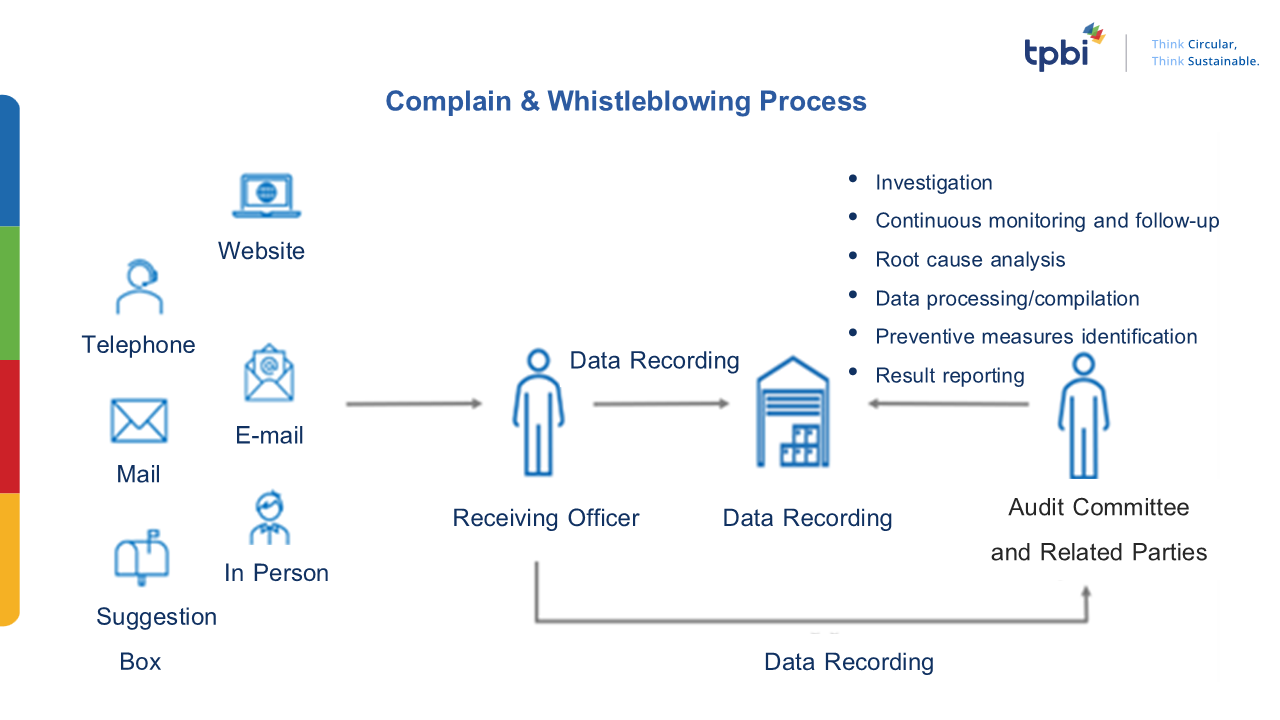
Stakeholders can inquire for details, submit complaints, or report legal misconduct inaccuracies in financial reports, deficient internal control systems, or violations of the company's business ethics. The company provides various contact channels, such as The Company's website, telephone, or email, and dedicated departments are provided to enable stakeholders to efficiently express opinions, submit complaints, or propose other important matters to the Company. For example, the Investor Relations Department and the Company Secretary's Office are responsible for receiving feedback and complaints from shareholders and investors, while management representatives and the Human Resources Department are responsible for receiving feedback and grievances from employees.
The Company has clearly established procedures for handling complaints from shareholders, customers, employees, and other stakeholders. Initially, the type of complaint received is assessed. If it pertains to good governance principles and business ethics, the Company Secretary's Office will gather evidence to present to the Sustainability and Corporate Governance Committee for further consideration and decision. For other types of complaints, they can be submitted through various channels.
6 channels, as follows:
Channel 1 | In-person complaints at the head office TPBI Public Company Limited 42/174 Moo 5 Soi Srisathianniwet, Rai Khing Subdistrict, Sam Phran District, Nakhon Pathom Province 73210 |
Channel 2 | Complaints in writing Company Secretary's Office TPBI Public Company Limited 42/174 Moo 5 Soi Srisathianniwet, Rai Khing Subdistrict, Sam Phran District, Nakhon Pathom Province 73210 |
Channel 3 | Complaints via telephone or fax Telephone 0-2429-0354-7 ext. 501 or Fax 0-2429-0358 |
Channel 4 | Complaints via Company Website www.tpbigroup.com |
Channel 5 | Complaints via email Audit Committee: ac@tpbigroup.com Investor Relations: ir@tpbigroup.com Company Secretary: company_secretary@tpbigroup.com |
Channel 6 | Suggestion box for employees |
 Whistleblower Protection Measures
To protect the rights and privacy of complainants, such complainants will be protected, and their personal information will be kept confidential, accessible only to those involved in the investigation process. Disclosure of information to unauthorized persons is prohibited, unless required by law. In cases where a complaint suggests potential misconduct, an investigation committee will be established, comprising executives and representatives from departments with no vested interest in the matter, to investigate and proceed according to the company's disciplinary regulations, and to report to the Audit Committee and the Board of Directors.
In cases where a violation or misconduct is genuinely found, the perpetrator will face disciplinary action and legal proceedings. For those affected by such incidents, the Company will implement appropriate remedial measures. These remedies include both monetary and non-monetary assistance.
Operational results in 25688 1/ | Number of violations/complaints | Number of issues resolved |
Number of incidents of non-compliance with laws and regulations regarding corporate governance, including fraud cases, conflicts of interest, discrimination, sexual harassment, and others. | 0 | 0 |
Number of incidents of unfair competition complaints received (Anti-Competitive Complaints) | 0 | 0 |
Number of incidents of non-compliance with social laws and regulations | 0 | 0 |
Number of incidents of non-compliance with environmental laws and regulations and | 0 | 0 |
Number of significant fines | 0 | 0 |
Number of corporate governance complaints | 0 | 0 |
Number of product communication complaints | 0 | 0 |
Number of complaints regarding incorrect information on product labels | 0 | 0 |
Number of complaints regarding customer personal data breaches | 0 | 0 |
1/ In 25688, the Company had no complaints and was not under investigation for any corruption cases or violations.
However, to prevent violations or breaches of the aforementioned practices, the Company has reviewed relevant processes across various departments to identify weaknesses in workflows. Risk assessments are conducted, along with preventive and corrective actions for potential issues. Additionally, internal audits are performed by both external firms and the Company's internal control unit to continuously oversee and monitor the Company's operations.
Number of Whistleblowing Cases
| Metric | Current Year | Previous Year | Two Years Ago |
|---|---|---|---|
| Total number of cases or issues received through whistleblowing channels (cases) | 0 | 0 | 0 |
Selection of Directors & Chief Executives
Selection — Introduction
In 2025, the Company conducted a search for and appointed directors to replace those whose terms expired at the Annual General Meeting of Shareholders for 2025. The Board of Directors considered individuals with knowledge, integrity, ethics, abilities, experience, and expertise beneficial to the Company's operations, and who possess qualifications suitable for the Company's business. This includes possessing qualifications and not having prohibited characteristics under the Public Limited Company Act B.E. 2535 (1992) (including any amendments) and the Securities and Exchange Act B.E. 2535 (1992) (including any amendments), as well as related announcements. The independence of independent directors was also considered regarding their ability to provide opinions independently and in accordance with relevant criteria. The Annual General Meeting of Shareholders considered and approved the election of
Mr. Kamol Borrisuttanakul, Director
Mr. Domedej Sripinproach, Director
who were existing directors whose terms had expired, to be re-appointed as directors for another term, and
Mr. Veerasak Kositpaisal, Independent Director
new directors to serve as independent directors. The Board of Directors considered and found that the qualifications of all three individuals are suitable for the Company's regulations, policies, and direction. Furthermore, the new directors are independent in expressing their opinions and perspectives to the Company in accordance with applicable regulations and possess qualifications consistent with the Company's operational strategies. For the election of directors, the Company allows shareholders to exercise their voting rights to elect directors individually, by having shareholders cast all their available votes for each nominated individual director, one by one.
Furthermore, during the year, two new directors were appointed to replace those who resigned, namely:
Dr. Vorapol Sokatiyanurak, Independent Director and
Dr. Charn Tharawas, Independent Director
who is independent in expressing opinions and perspectives to the Company in accordance with applicable regulations and possesses qualifications consistent with the Company's operational strategies, with a remaining term equal to that of the resigning director.
Directors & Chief Executives — Introduction
Director Recruitment
In the recruitment of company directors, the Company prioritizes individuals with knowledge, competence, experience, a good work history, leadership qualities, broad vision, as well as ethics and morality, and a positive attitude towards the organization, who can dedicate sufficient time, which is beneficial to the Company's operations. A Director Pool database may also be utilized for new director recruitment. Furthermore, the Company considers Board Diversity in the structure of the Board of Directors, encompassing diverse professional skills, knowledge, experience, and specialized expertise beneficial to the business operations of the Company and its subsidiaries, without discrimination based on gender, race, religion, or age. A Board Skills Matrix is prepared to define the qualifications of desired directors, considering essential missing skills and suitable qualifications that align with the composition and structure of the Board according to the Company's business strategy. The process is transparent to build confidence among shareholders. The steps for director recruitment are as follows:
The Company provides an opportunity for minority shareholders to nominate individuals for directorships to the Company.
The Nomination and Remuneration Committee reviews the structure of the Board of Directors to ensure its suitability with the Company's strategic needs.
Consider defining the knowledge, abilities, and experience of the directors to be recruited, ensuring alignment with the Company's goals and strategies.
The Nomination and Remuneration Committee conducts the selection and proposes suitable candidates for the position of director to replace directors whose terms have expired or newly appointed directors, and submits the names of suitable candidates to the Board of Directors for approval.
The Board of Directors approves the list of directors and submits it for approval at the Annual General Meeting of Shareholders.
Chief Executive Officer Recruitment
The Nomination and Remuneration Committee will consider, select, and screen individuals with suitable abilities and qualifications for the position of Chief Executive Officer. Initial factors for consideration include qualifications, knowledge, abilities, and experience. The selected candidate for the position should possess management concepts and vision aligned with those of the Board of Directors to ensure the successful achievement of the Company's operational goals. The Chief Executive Officer and the Board of Directors must have mutual trust and close coordination. The Nomination and Remuneration Committee will propose the selected individual to the Board of Directors for further consideration and appointment. For other executive positions, the Chief Executive Officer will consider the qualifications and propose them to the Board of Directors for acknowledgment.
Are Directors Selected Through the Nomination Committee?
Yes
Are Chief Executives Selected Through the Nomination Committee?
Yes
Number of Directors from Major Shareholders
4
Rights of Minority Shareholders on Director Appointment
Nomination of Directors
The Company provides an opportunity for minority shareholders to nominate individuals for directorship.
The nomination period is no less than 1 month before the Annual General Meeting of Shareholders.
Format and methods of dissemination via the Company's website.
Consideration Process
The Nomination and Remuneration Committee will consider the qualifications of the nominated candidates.
Submitted to the Board of Directors for consideration.
If not approved, shareholders will be informed of the reasons.
Meetings and Voting
Equal opportunities are provided to all shareholders.
Shareholders are entitled to one vote per one share.
Ballot papers and/or E-Voting are used for transparency.
Directors are elected individually.
Votes are counted by a computer system and verified by independent individuals.
Development of Rights Exercise Guidelines
The Company is committed to continuously developing the rights exercise process for the benefit of shareholders.
Method of Director Appointment
| Method |
|---|
| Method whereby each director requires approval votes more than half of the votes of attending shareholders with voting rights |
Selection of Independent Directors
Criteria for Selecting Independent Directors
Qualifications of Independent Directors
The Company requires that directors who do not serve as executives be independent from management and controlling shareholders, and be persons who have no business relationships with the Company that would restrict their independent opinion, and must possess the following additional qualifications:
Hold no more than 0.5% of the total voting shares of the Company, parent company, subsidiaries, associate companies, major shareholders, or controlling persons of the Company, including shares held by related persons of such independent director.
Not be a person related by blood or legal registration as father, mother, spouse, sibling, or child, including spouse of child, of executives, major shareholders, controlling persons, or persons nominated to be executives or controlling persons of the Company or subsidiaries.
Not have or have had business relationships with the Company, subsidiaries, major shareholders, or controlling persons of the Company that may obstruct independent judgment, including not being or having been a significant shareholder or controlling person of those having business relationships with the Company, subsidiaries, major shareholders, or controlling persons of the Company, unless having been free from such characteristics for at least two years prior to appointment. Such business relationships include ordinary commercial transactions for business operations, leasing or renting real estate, transactions related to assets or services, or provision or receipt of financial assistance through loans, guarantees, provision of assets as collateral for debt, including other similar circumstances resulting in the Company or counterparty having liabilities payable to each other from 3% of the Company's net tangible assets or from twenty million baht upward, whichever is lower. The calculation of such liabilities shall be in accordance with the method for calculating the value of connected transactions under the Capital Market Supervisory Board's notification on criteria for connected transactions by analogy. For consideration of such liabilities, include liabilities incurred during one year prior to the date of business relationship with the same person.
Not be or have been an employee or auditor of the Company, subsidiaries, major shareholders, or controlling persons of the Company, and not be a significant shareholder, controlling person, or partner of the audit firm to which the auditor of the Company, subsidiaries, major shareholders, or controlling persons of the Company belongs, unless having been free from such characteristics for at least 2 years prior to appointment.
Not be or have been a professional service provider of any kind, including legal or financial advisory services, receiving service fees exceeding 2 million baht per year from the Company, subsidiaries, major shareholders, or controlling persons of the Company, and not be a significant shareholder, controlling person, or partner of such professional service provider, unless having been free from such characteristics for at least 2 years prior to appointment.
Not be a director appointed as a representative of the Company's directors, major shareholders, or shareholders who are related to major shareholders.
Not have any other characteristics that prevent independent opinion on the Company's operations.
Not engage in business of the same nature and in significant competition with the Company's or subsidiaries' business, or not be a significant partner in a partnership or be a director participating in management, employee, salaried advisor, or hold more than 1% of total voting shares of another company engaging in business of the same nature and in significant competition with the Company's or subsidiaries' business.
Not be a director participating in management, employee, salaried advisor, or controlling person of the Company, parent company, subsidiaries, associate companies, same-level subsidiaries, major shareholders, or controlling persons of the Company both currently and for at least 2 years prior to appointment as independent director. Such prohibited characteristics do not include cases where the independent director was previously a government official or advisor to a government agency that is a major shareholder or controlling person of the Company.
Furthermore, after being appointed as an independent director of the Company, the independent director may be assigned by the Board of Directors to make decisions on the operations of the Company, parent company, subsidiaries, associate companies, same-level subsidiaries, major shareholders, or controlling persons of the Company through Collective Decision-making, without being considered as a director participating in management.
The recruitment process is as follows:
The Company provides opportunities for minority shareholders to nominate individuals to serve as Company directors, prioritizing individuals with knowledge, capability, experience, good work history, leadership, broad vision, morality, ethics, and positive attitude toward the organization, who can dedicate sufficient time to benefit the Company's operations, or may utilize the Director Pool database in recruiting new directors. Additionally, Board Diversity is considered in terms of knowledge and capabilities across diverse professional skills, experience, and specific expertise beneficial to the business operations of the Company and subsidiaries, without limitation on gender, race, religion, or age.
The Nomination and Remuneration Committee reviews the Board structure to ensure appropriateness with the Company's strategic needs.
Determine the knowledge, capabilities, and experience of directors to be recruited in alignment with the Company's objectives and strategies.
The Nomination and Remuneration Committee conducts recruitment, selection, and nomination of qualified individuals for director positions to replace directors whose terms have expired or additional appointed directors, and proposes suitable candidates to the Board of Directors for approval.
The Board of Directors approves the list of Company directors and submits for approval at the Annual General Meeting of Shareholders.
Did Any Independent Director Have a Business or Professional Relationship?
No
Director Development
Director Development — Introduction
The Company encourages its directors to attend training courses beneficial to their duties by promoting their participation in training with the Thai Institute of Directors (IOD), such as the Director Certification Program (DCP) or the Director Accreditation Program (DAP), and other relevant institutions on an ongoing basis. The Company also supports internal training by regularly inviting experts or consultants to present information beneficial to the business. Furthermore, directors also participate in other company activities and serve as speakers to impart knowledge in various training sessions.
Qualifications for Director Selection
| Qualification | Skill & Expertise |
|---|---|
| The Company's Board Diversity Policy ensures that the Board of Directors comprises diversity in gender, skills, professions, and diverse competency components (Board Diversity), with skills aligned with business strategies, achieved through the development of a Board Skills Matrix. It also features diversity in educational backgrounds and experience, such as in plastic packaging, plastic pellets and petrochemicals, international business, organizational development, and innovation. Currently, the company has 4 independent directors out of a total of 10 directors. Additionally, the Board of Directors utilizes a Director Pool for the recruitment of new directors. In the director recruitment process, the Board has developed a Board Skill Matrix to accurately and appropriately define the qualifications of the desired directors. | 112 · Description: Economics · 124 · Description: Petrochemicals & Chemicals · 125 · Description: Packaging · 144 · Description: Finance · 265 · Description: Governance/ Compliance |
Evaluation of Board & Subcommittee Performance
Criteria for Evaluating Board Performance
The Company conducts performance evaluations at least once a year, utilizing the Board of Directors' performance evaluation guidelines from the Stock Exchange of Thailand. The Company Secretary is responsible for distributing the Board performance evaluation forms to the Board of Directors and sub-committees for evaluating the performance of the individual committee and individual directors. Subsequently, the scores are collected and summarized for submission to the meeting of the Sustainability and Corporate Governance Committee and the Board of Directors. This allows the Board of Directors to review the evaluation results, identify problems and obstacles encountered during the past year, propose corrective measures, and utilize the evaluation results to enhance the efficiency of the Board's duties for the utmost benefit in good corporate governance. The evaluation criteria, calculated as a percentage of the total score, are as follows:
90% – 100% = Excellent
76% – 89% = Very Good
66% – 75% = Good
50% – 65% = Fair
Below 50% = Needs Improvement
Evaluation of Board Performance in the Past Year
In the past year, the company conducted an evaluation with the following assessment topics:
Topics for evaluating the performance of Individual committees are as follows:
Structure and qualifications of the Board of Directors
Roles, duties, and responsibilities of the Board of Directors
Board meetings
Performance of directors
Relationship with management
Director self-development and executive development
Results of the corporate governance assessment of the company by the Thai Institute of Directors Association
Topics for evaluating the performance of Individual directors are as follows:
Structure and qualifications of the Board of Directors
Board meetings
Roles, duties, and responsibilities of the Board of Directors
Furthermore, the Board of Directors also provided additional opinions and recommendations to improve the efficiency of the Board's performance, in order to achieve maximum benefit in corporate governance
Evaluation Results
| Evaluated Body | Group — Carried Out? | Group — Grade / Average Score | Group — Grade / Full Score | Individual (Self-Assessment) — Carried Out? | Individual (Self-Assessment) — Grade / Average Score | Individual (Self-Assessment) — Grade / Full Score | Cross (Assessing Other Directors) — Carried Out? |
|---|---|---|---|---|---|---|---|
| Board Of Director | Y | Very Good | Excellence | Y | Very Good | Excellence | N |
| Audit Committee | Y | Excellence | Excellence | Y | Excellence | Excellence | N |
| Other Subcommittee | Y | Excellence | Excellence | Y | Excellence | Excellence | N |
| Other Subcommittee | Y | Excellence | Excellence | Y | Excellence | Excellence | N |
| Other Subcommittee | Y | Very Good | Excellence | Y | Very Good | Excellence | N |
Subcommittees
Subcommittees
| Results of the Subcommittee's Duty Performance |
|---|
In 2025, the key aspects of the performance can be summarized as follows: 1. Consider providing opinions on the appointment of directors to replace those whose terms have expired. Considering knowledge, ability, experience, good work history, leadership, broad vision, as well as integrity, ethics, and a positive attitude towards the organization, with sufficient time commitment, which benefits the company's operations. Furthermore, consideration is given to Board Diversity and the Board Skills Matrix to define the qualifications of desired directors, based on essential missing skills, as well as past and present performance and roles that can build confidence among stakeholders, including suitable qualifications consistent with the composition and structure of the Board according to the company's business strategy, to be submitted for the Board of Directors' approval and proposed to the Annual General Meeting of Shareholders for consideration and approval. Shareholders were also given the opportunity to nominate suitable individuals for selection as directors, but no individuals were nominated for the director selection process. 2. Consider determining the remuneration for directors for the year 2025. Considering the company's performance and business size, practices of listed companies in the same industry, and leading national companies, such remuneration is sufficient to incentivize qualified directors to perform their duties to achieve the company's defined goals and business direction, as well as the responsibilities of the Board of Directors, together with the results of the Board's evaluation on various topics specified in the annual evaluation form, to be submitted for the Board of Directors' consideration. 3. Consider the evaluation guidelines for determining the remuneration of the Chief Executive Officer. by considering various factors such as the company's performance, performance according to vision and sustainability, and leadership management capabilities before presenting to the Board of Directors. This remuneration sufficient to incentivize qualified executives to perform their duties to achieve the company's defined goals and business direction. The Nomination Committee has performed its duties independently in accordance with good corporate governance principles to ensure transparency in the process of personnel selection and remuneration determination, thereby building confidence among shareholders and all stakeholders. |
In 2025, the key aspects of performance can be summarized as follows: 1. Sustainability 1.1 Monitored and oversaw the organization's sustainable development operations by identifying key sustainability issues, setting policies and goals for sustainability management covering economic, social, and environmental dimensions. Plans were developed to reduce resource consumption, increase the use of renewable energy, and promote the development of innovative products and services. These plans were reported to the Board of Directors for consideration and approval of key sustainability issues before actual implementation across the organization. 1.2 Monitored and ensured that management incorporates key sustainability issues into the annual strategy and action plans, as well as the Company's sustainability performance indicators. 1.3 Considered and approved sustainability performance results across all ESG dimensions for disclosure in the 56-1 One Report. 1.4 Ensured the evaluation of sustainability performance, resulting in the Company receiving an "AAA" ESG Rating and the "Highly Commended Supply Chain Management Awards" in the Sustainability Excellence category at the SET Awards 2025. 2. Corporate Governance 2.1 Reviewed the Good Corporate Governance Policy of the Company and its subsidiaries for internal implementation, ensuring alignment with the criteria of the CGR project by the Thai Institute of Directors (IOD). The charters of the Board of Directors and sub-committees were reviewed and amended to comply with laws, current situations, and practices recommended by the Securities and Exchange Commission. The Code of Conduct and work practices were also reviewed to be appropriate for current operations, resulting in an "Excellent" rating for good corporate governance for the 6th consecutive year in the 2025 Corporate Governance Report of Thai Listed Companies (CGR) survey. 2.2 Conducted the Annual General Meeting of Shareholders, considering the rights and equality of all shareholder groups and genuinely intending for shareholders to participate in management, thereby promoting a system of checks and balances in good governance, which is at the heart of sound corporate governance. 2.3 Organized an annual company strategy seminar with management to review the vision and Set short-term and long-term organizational goals and arrange inter-meetings of non-executive directors (for independent directors only) once in 13 December 2025, on issues related to the oversight of the Company's management system, and reported to the Board of Directors meeting. 2.4 Organized training and communicated the Good Corporate Governance Policy, Business Ethics, and Code of Conduct to all directors, executives, and employees, to ensure everyone implements them and drives the organization in the same direction. The Business Ethics cover important policies and practices, including ethics towards stakeholders, business ethics, ethical conduct, and monitoring compliance. Furthermore, the Business Ethics raise awareness and are used to communicate to all directors and personnel within the organization to understand good values and apply them in practice, serving as a guideline towards transparency and sustainable leadership. 2.5 Organized an orientation for two new directors, Dr. Worapol Sokatiyanurak and Mr. Veerasak Kositsaisan, to familiarize them with the Company's nature, overview, and business operations, the roles and responsibilities of the Board of Directors according to relevant laws and regulations, the Good Corporate Governance Policy, and other necessary and beneficial information for effective performance of their duties. 2.6 Organized annual performance evaluations for the Board of Directors and sub-committees in 2025, with the following formats: Two types of evaluations were conducted: individual committee and individual director, to allow the Board of Directors to review performance, problems, and obstacles encountered during the year, which will lead to further development and improvement of operations. The evaluation results, including various recommendations, were disclosed to all directors to serve as a guideline for development subsequent performance. 2.7 Emphasized communication regarding good corporate governance, business ethics, and work practices to employees at all levels. 2.8 Monitored whistleblower reports or complaints and investigated various company activities. There were no complaints regarding good corporate governance, ethics, and work practices, including cases of fraud or corruption. Furthermore, there were no violations related to fraud, corruption, or ethical misconduct, demonstrating the Company's commitment to prioritizing good corporate governance with integrity, honesty, and morality to enhance competitiveness and sustainable growth. 3. Information Disclosure and Transparency The Company prepares Management Discussion and Analysis (MD&A) for financial statement disclosure and issues quarterly newsletters to report summarized operating results, published via the Company's website. This also includes participation in the Stock Exchange of Thailand's Opportunity Day events. In 2025, the Company participated in Opportunity Day events twice and published newsletters via the Company's website. Details are as follows:
|
"In 2025, the key aspects of duty performance can be summarized as follows: 1. Oversee, consider policies, and manage the Company's principal risks by defining and monitoring Key Risk Indicators (KRIs) that could impact the organization's Key Performance Indicators (KPIs) in a timely manner amidst rapidly changing business situations, stemming from both internal and external factors such as safety, environmental, social, and community impacts, compliance with regulations and laws, anti-corruption, emerging diseases, and monitoring risks from cybersecurity threats, etc. To ensure sustainable business development alongside environmental and social considerations under corporate governance, the Risk Management Committee has prioritized the Company's risk management to enable appropriate operations, monitoring, and tracking of overall impacts to control risks to an acceptable level. The Risk Management Committee has considered significant risks and risk management, as well as considered the suitability and effectiveness of the risk management policy to facilitate risk management operations and report to the Audit Committee and the Board of Directors quarterly. The Risk Management Committee found that the risk management process can identify significant risks, and the management is appropriate and sufficient for managing and monitoring risks, as well as being balanced with business opportunities. 2. Fostering a Risk Management Culture. The Risk Management Committee has promoted risk management policies across all businesses, and the Company has communicated this to employees for their awareness and compliance. The Risk Management Committee is of the opinion that the Company's risk management process is appropriate and effective, aligning with the established risk management framework, and fully supported by management. Furthermore, a risk management culture has been fostered within the organization through various activities, as detailed below:
|
Meeting Attendance & Remuneration
Meeting Attendance — Remark
Types of Remuneration of the Board of Directors
The Nomination and Remuneration Committee considers and establishes clear, fair, reasonable, and easily understandable policies and criteria for the remuneration of company directors, and presents them to the Board of Directors for submission to the Annual General Meeting of Shareholders for approval. The process for considering the annual remuneration amount is conducted transparently.
The determination of the remuneration structure/components must be appropriate to the duties and responsibilities assigned to each director and the benefits derived from each director, in a fair manner, consistent with the company's performance, at a level that can attract and retain qualified directors, or comparable to those in the same industry.
The Board of Directors must disclose the form, nature, and amount of remuneration received by each director throughout the year, including remuneration received from serving as a director in subsidiary companies based on their position or duties, to demonstrate the connection with the policies stipulated in Form 56-1 One Report.
Director's Remuneration
Monetary Remuneration
Annual General Meeting of Shareholders On 26 April 2025has considered and approved the payment of annual remuneration to directors at a rate that is differing among directors (Excluding independent directors) and independent directors as shown in the table
Position | Remuneration for 2025 (Baht/year) | ||
1. | Chairman of the Board | 1,200,000 | |
2. | Chairman of the Audit Committee | 280,000 | |
3. | Chairman of the Nomination and Remuneration Committee | 140,000 | |
4. | Chairman of the Sustainability and Corporate Governance Committee | 140,000 | |
5. | Independent Director | 330,000 | |
6. | Audit Committee Member | 200,000 | |
7. | Nomination and Remuneration Committee Member | 100,000 | |
8. | Sustainability and Corporate Governance Committee Member | 100,000 | |
9. | Director | 180,000 | |
10. | Board of Directors Meeting Allowance | ||
| 10,000 Baht/meeting | ||
| 5,000 Baht/meeting | ||
Note :
| |||
Additionally, the Company provides additional director remuneration in the form of bonuses, based on the performance of the Board of Directors and the Company's operating results for each accounting period.
Position | Bonus for 2024 |
Independent Director | not exceeding 0.5% of the dividends |
There are no other benefits provided to directors apart from director's remuneration and annual bonus. Executive directors do not receive a bonus in their capacity as company directors.
Remuneration of the Board of Directors
Remuneration or Benefits Payable to the Board
| Metric | Amount (Baht) |
|---|---|
| Remunerations or benefits pending payment to the board of directors over the past year (baht) | 0 |
Supervision of Subsidiaries & Associated Companies
Does the Company Have Subsidiaries or Associated Companies?
Yes
Is There a Mechanism for Overseeing Subsidiaries and Associated Companies?
Yes
Mechanism for Overseeing Management of Subsidiaries
The Company has a policy for investment and supervision of its subsidiaries' operations. It will invest in businesses that are related, similar, beneficial, and support the Company's operations to enhance the Company's stability and performance. Such subsidiaries must not have individuals who may have conflicts of interest with the Company, such as directors, executives, or major shareholders, jointly holding more than 10% of the total voting shares of that subsidiary, unless it can be demonstrated that the shareholding structure of the subsidiary allows the Company to control and supervise the subsidiary's business and operations as if it were an integral part of the Company. Therefore, the Company stipulates that the nomination and exercise of voting rights for appointing individuals as directors in subsidiaries must receive prior approval from the Company's Board of Directors. Individuals appointed as directors in subsidiaries are responsible for monitoring and ensuring that the subsidiaries fully and accurately disclose important information in accordance with relevant regulations. They must oversee and control the subsidiaries to ensure adequate and appropriate internal control systems. They must ensure that the directors and executives of the subsidiaries perform their duties and responsibilities as prescribed by law. Furthermore, they must act in the best interests of the respective subsidiary (not necessarily the Company) and in accordance with the Company's policies. The Company requires that such appointed individuals must obtain approval from the Company's Board of Directors before casting votes or exercising voting rights on significant matters, at the same level of approval required if the Company were to undertake the action itself. For transactions between subsidiaries and related parties, the acquisition or disposal of significant assets, or any other significant transactions of subsidiaries, such as the dissolution of a subsidiary, or the approval of capital increase or decrease, a resolution from the Board of Directors' meeting or shareholders' meeting must be obtained prior to such transactions. Furthermore, the individuals appointed by the Company must ensure that the subsidiaries conduct related party transactions, asset acquisitions or disposals, or any other significant transactions fully and correctly, applying the same criteria related to disclosure and transactions as those of the Company. They must also supervise the collection of data and accounting records of the subsidiaries to enable the Company to audit and consolidate them for timely preparation of consolidated financial statements. In the past, the Company has strictly complied with the regulations of the Stock Exchange of Thailand and the announcements of the Securities and Exchange Commission concerning connected transactions and transactions that may give rise to conflicts of interest. The appointment of directors to represent the Company in such subsidiaries is in accordance with the Company's shareholding proportion and/or agreements between shareholders in such subsidiaries or associated companies.
Over the past year, the Board of Directors has monitored and supervised its subsidiaries by communicating corporate governance policies, business ethics, and codes of conduct to both domestic and international subsidiaries. All employees (100%) received and acknowledged these communications. The Board also ensured 100% reporting of conflicts of interest for directors, executives, and employees of domestic subsidiaries. Furthermore, resolutions were passed to approve auditors and engage external internal audit firms to audit the subsidiaries, thereby ensuring transparent, verifiable operations that comply with established policies.
Oversight Mechanisms
| Mechanism |
|---|
| Disclosure of financial information and operating results |
| Transactions between the Company and related persons |
| Acquisition or disposal of assets |
| Other important transactions |
| Internal control system of the subsidiary operating the core business is appropriate and sufficient in the subsidiary operating the core business |
| Sending representatives to act as directors, executives or controlling persons in proportion to shareholdings |
| Defining the scope of powers, duties and responsibilities of directors and executives who represent the company in setting important policies |
Board Duty Performance — Overview
Board Duty Performance — Overall Description
Roles and responsibilities of the Board of Directors in approving/defining, reviewing, and monitoring the implementation of the Company's vision, mission, and strategies.
The Board of Directors regularly reviews the Company's vision, mission, and strategies annually and continuously monitors the implementation of the Company's strategies. The Board of Directors participates in defining the vision, strategies, business direction, policies, goals, business plans, budgets, organizational structure, and approval authority of the Company and its subsidiaries as proposed by management. This includes continuous and consistent oversight and monitoring of the management of the Company and its subsidiaries to achieve strategies and adhere to established plans, budgets, and policies efficiently and effectively, to maximize value for the Company and its shareholders, while considering ethics, social impact, environmental impact, and the Company's sustainability as paramount. It also ensures that the Company and its subsidiaries have appropriate and efficient accounting systems, provide reliable financial reporting and auditing, and establish adequate and appropriate internal control and internal audit systems.
At the Board of Directors Meeting No. 6/2025, the vision, mission, and organizational values were reviewed, and the business direction was acknowledged. At the Board of Directors Meeting No. 7/2025, the Company's strategies for 2026 were considered and defined, including both business strategies and sustainability strategies. Additionally, the implementation of the Company's strategies is monitored and overseen at least once per quarter.
Audit Committee Duty Performance
Results of the Audit Committee's Duty Performance in the Past Year
In 2025, the Audit Committee provided recommendations on various relevant matters, receiving excellent cooperation from the management, internal auditors, and the Company's external auditors. The Committee held joint consultations, expressed opinions, and provided independent recommendations as appropriate. The significant matters can be summarized as follows:
1. Financial Statement Review
The Audit Committee reviewed the Company's quarterly and annual financial statements for 2025 in conjunction with the external auditors and management. The review focused on significant accounting items and materially changed items to ensure that such financial statements were prepared in accordance with accounting standards, with complete, accurate, reliable, appropriate, and timely disclosure of information, providing genuine benefits to shareholders and other users of the financial statements.
2. Review of the Company's Internal Control System
The Company places great importance on its internal control system by engaging external internal auditors who adhere to accepted professional standards and can efficiently perform internal audits. These auditors have no interests in the Company and maintain independence in reporting factual information to the Audit Committee, which enhances corporate governance, internal control systems, and risk management efficiency. The Company has selected Honor Audit and Advisory Company Limited as its internal auditor and arranges for reviews and evaluations of internal control systems and risk management to maintain acceptable levels. The Audit Committee is of the opinion that the internal control and risk management systems are appropriate and adequate. The Committee has also approved the annual audit plan, reviewed audit reports, and monitored improvements based on the internal auditor's findings, while providing observations to benefit efficient and effective improvements.
3. Compliance with Securities and Exchange Laws, Stock Exchange Requirements, and Oversight of Compliance with Related Laws, Regulations, and Policies
The Audit Committee has reviewed compliance with the Securities and Exchange Act, the Stock Exchange of Thailand's requirements, the Capital Market Supervisory Board's requirements, all announced accounting standards, as well as laws related to the Company's business operations. This is to ensure that the Company complies with relevant laws and regulations. The Committee has also driven and promoted compliance with the anti-corruption policy throughout the organization. The Audit Committee found that the Company has properly complied with relevant laws and regulations, and no cases of corruption were identified.
4. Supervision of Transactions with Potential Conflicts of Interest
The Audit Committee has reviewed related party transactions between the Company and its subsidiaries, and transactions within the business group to ensure such transactions are reasonable, provide maximum benefit to the Company, and comply with the laws and regulations of the Stock Exchange of Thailand. The Audit Committee is of the opinion that such transactions have been conducted under normal business conditions with sufficient and complete disclosure of information. The Committee has also provided recommendations to management for use as standard operating guidelines.
5. Reporting to the Board of Directors
The Audit Committee has reported the performance results of internal auditors to the Board of Directors on a quarterly basis, providing beneficial recommendations for management. The management has appropriately implemented improvements according to these recommendations.
6. Consideration and Nomination of Auditors
The Audit Committee has held meetings with the auditors and found no significant issues regarding financial reporting, and the auditors have performed their audit duties appropriately. Therefore, the Committee has considered and sought approval from the Board of Directors to propose to the shareholders' meeting for the appointment of auditors and the audit fee for the year 2026. The Committee has proposed auditors from EY Office Limited to serve as the Company's auditors for the fiscal year ending December 31, 2026, for another term, designating any one of the following auditors:
Mr. Serm | Brisuthikun | Certified Public Accountant No. 9452 and/or |
Ms. Krongkaew | Limkittikun | Certified Public Accountant No. 5874 and/or |
Ms. Sirirat | Sricharoensup | Certified Public Accountant No. 5419 |
Serves as the auditor and provides an opinion on the company's financial statements. Based on the auditing firm's past performance, which meets professional standards, demonstrates a thorough understanding of the company's business, and consistently delivers work on time. The auditors meet the qualifications specified by the Securities and Exchange Commission. The auditing firm and auditors are independent and have accepted qualifications, with no relationships or conflicts of interest with the company, its subsidiaries, executives, major shareholders, or related parties.
7. Private Meeting with Auditors and Internal Auditors without Management
The Audit Committee held a meeting with the external auditors and internal auditors without the presence of management, once to acknowledge issues found during the audit and internal review. This meeting ensures that the auditors and internal auditors can work independently and allows for evaluation of their work performance, work experience, knowledge, capabilities, credibility, and resource sufficiency, compared with the proposed audit and internal review fees. The committee also reviewed the qualifications and independence of the company's external auditors and internal auditors to confirm compliance with the Securities and Exchange Commission (SEC) regulations.
The Audit Committee is of the opinion that in 2025, the company has established adequate and appropriate internal control systems, internal audit processes, and risk management systems. Additionally, the company has implemented processes that provide reasonable assurance that the company's operations comply with relevant laws and that the preparation and disclosure of financial reports are accurate, complete, and reliable.
Executive Committee Duty Performance
Results of the Executive Committee's Duty Performance in the Past Year
The Executive Board has performed its duties within the scope, authority, functions, and responsibilities assigned by the Board of Directors.
Over the past year, significant operational achievements include:
1. Policy and Strategy Formulation.
Developed an organizational strategic plan and business plan, along with setting operational goals in line with the company's sustainability guidelines and annual budget, submitted to the Board of Directors for consideration and approval.
Review and revise operational policies to align with changing market conditions and competition.
2. Business Operations Oversight.
Monitor the company's performance monthly to ensure business operations align with approved goals and plans.
Provide advice and recommendations to management on adjusting operational strategies to achieve the established targets.
Implement timely corrective measures for problems and obstacles arising in business operations.
3. Consideration and Approval of Investments and Financial Transactions.
Approve investments in various projects within the budget framework approved by the Board of Directors.
Consider and approve financial transactions with financial institutions as necessary and appropriate.
Oversee budget expenditures to ensure efficiency and compliance with established plans.
4. Management Structure Definition.
Improve organizational structure for efficient management.
Clearly define the scope of duties and responsibilities for each level of management.
Develop a human resource management system to enhance potential and career advancement.
5. Oversight and Approval of Operational Matters.
Consider and approve various plans and projects related to the company's business operations.
Oversee operations to ensure compliance with laws, regulations, rules, and company policies.
Promote the adoption of innovation and technology in developing the company's operations and products.
6. Actions as Assigned by the Board of Directors.
Fully perform special duties as assigned by the Board of Directors.
Regularly report on the performance and progress of various projects to the Board of Directors.
The Executive Board is committed to performing its duties with prudence, diligence, and a focus on the best interests of the company and its shareholders, adhering to principles of good corporate governance and business ethics throughout its tenure.