

Business Operation · 2025
In this section22 topics
- Corporate Information4 items
- Dividend Policy2 items
- Major Shareholders1 item
- Business Strategies Overview6 items
- Material Changes & Developments1 item
- Use of Proceeds from Securities Offerings1 item
- Commitments Made in the Registration Statement1 item
- Group Operating-Structure Policy1 item
- Companies Where the Company Holds ≥10%1 item
- Shareholders with Potential Conflict of Interest1 item
- Relationships Among Major Shareholders1 item
- Shareholders' Agreement1 item
- Shareholding Diagram (Group Structure)2 items
- Income Structure4 items
- Product / Service Characteristics3 items
- Research & Development6 items
- Assets Used in the Business6 items
- Marketing Policy & Competition4 items
- Procurement of Products & Services5 items
- Projects Under Construction1 item
- Debentures & Bills of Exchange1 item
- Convertible Securities1 item
Corporate Information
Company Name
TPBI Public Company Limited
Telephone
0-2429-0354-7
Website
www.tpbigroup.com
company_secretary@tpbigroup.com
Dividend Policy
Dividend Policy
The Company has a policy to pay dividends to shareholders consistently at a rate of not less than 50 percent of the net profit from the Company's separate financial statements each year after deducting legal reserves and other reserves (if any). However, the dividend payment rate may vary depending on current cash and liquidity, future cash flow, operating results, financial position, financial structure, future operating plans, and the Company's and its subsidiaries' capital expenditure requirements, as well as the conditions and terms of various agreements to which the Company and its subsidiaries are bound, including other necessities and considerations which the Board of Directors will take into consideration in proposing dividend payment opinions to shareholders. The resolution of the Board of Directors approving the dividend payment shall be submitted for approval by the Annual General Meeting of Shareholders, except for the payment of interim dividends to Shareholders authorize the Board of Directors to approve the payment when it deems that the Company has sufficient profit and cash flow to do so, and when the dividend is paid, to report such interim dividend payment to the shareholders' meeting at the next meeting.
Historical Dividend Payments
| This Year | Last Year | 2 Years Ago | 3 Years Ago | 4 Years Ago | Metric | Description | Remark |
|---|---|---|---|---|---|---|---|
| 0.4 | 0.65 | 0.42 | 0.51 | 0.14 | Net profit per share (Baht : Share) | Net profit per share (baht : share) | |
| 0.23 | 0.3 | 0.25 | 0.2 | 0 | Dividend per share (Baht : Share) | Dividend per share (baht : share) | 1. On 21 February 2026, the Board of Directors' Meeting passed a resolution to propose to the 2026 Annual General Meeting of Shareholders, scheduled to be held on 25 April 2026, for consideration and approval of the Company's dividend payment. In this regard, the aforementioned entitlement remains subject to uncertainty, as it is pending approval from the Annual General Meeting of Shareholders.
2. The Company pays dividends in cash. |
| 416,879,900 | 416,879,900 | 416,879,900 | Dividend stock ratio (Number of original shares: dividend shares) | Ratio of stock dividend payment (existing share : stock dividend) | |||
| 0 | 0 | 0 | 0 | 0 | Dividend share value per share (Baht : Share) | Value of stock dividend per share (baht : share) | |
| 95,882,377 | 125,063,970 | 104,219,975 | 83,375,980 | 0 | Total dividend payment value (Baht : Share) | Total dividend payment (baht : share) | |
| 57.98 | 46.08 | 59.02 | 38.86 | 0 | Dividend payout ratio to net profit (%) | Dividend payout ratio compared to net profit (%) |
Business Strategies Overview
Chairman's Message
The year 2025 marked another year in which the global economy faced challenges from international trade uncertainties, geopolitical tensions, and exchange rate volatility. Amid such circumstances, the Board of Directors thoroughly reviewed the Company's vision, mission, and strategies during the past fiscal year, while continuously monitoring the implementation of various strategies to ensure that all shareholders and stakeholders remain confident that the Company continues to operate on a strong foundation, ready to adjust strategies to enhance operational efficiency and elevate the product portfolio toward profitable segments, aiming for sustainable long-term growth.
Over the past year, revenue from exports and sales from overseas subsidiaries, such as those in the United Kingdom and Australia, accounted for 55% of total sales, reflecting the strength of our international customer base, despite pressure from the appreciation of the Thai Baht and import tariff policies of the United States.
Under the concept "Think Circular, Think Sustainable," the Company has driven sustainability alongside tangible business value creation by focusing on the development of environmentally friendly packaging innovations, enhancing energy and resource efficiency, and continuously improving the quality of life for employees and communities.
The "Won" Project, which has expanded collaboration with Thailand Post Company Limited, represents another significant milestone in establishing a circular economy system by increasing plastic packaging collection points nationwide to process them into high-quality Post-Consumer Recycled (PCR) pellets for practical use. This collaboration not only helps reduce plastic waste leakage into the environment but also creates broad participation from the public and various sectors of society, aligning with the Company's Net Zero target by 2050. Alongside environmental operations, the Company remains committed to corporate governance principles and social responsibility, including employee development, workplace safety, and creating opportunities for surrounding communities. These commitments have been recognized through the SET ESG Ratings at AAA level for the 2nd consecutive year, CGR at "Excellent" level for the 6th consecutive year, the Highly Commended Supply Chain Management Award from SET Awards 2025, and the Thailand's Best Corporate Governance 2025 award from World Finance Magazine.
In 2026, the Company will enter its 45th year of business operations. The Board and I are committed to driving TPBI toward becoming a globally recognized organization with stable growth, ready to elevate our leadership in sustainable packaging in the region through innovation expansion, extending partnerships with both domestic and international allies, and delivering comprehensive value encompassing economic, social, and environmental dimensions to customers, stakeholders, and society as a whole.
Finally, I would like to express my gratitude to all shareholders, business partners, and employees who have played crucial roles in driving the organization forward through various challenges continuously, and I affirm with confidence that TPBI will remain committed to conducting business responsibly, ready to grow toward a sustainable future together with all of you forever.
Chairman of the Board of Directors
TPBI Public Company Limited
Vision
"Think Circular, Think Sustainable."
TPBI Group will be a leader in packaging, growing sustainably with customers, partners, employees, shareholders,
and society.
Objectives
The group of companies is committed to meeting the needs of customers in manufacturing plastic and paper packaging with international quality standards. We emphasize good service, being able to respond to purchase orders ontinuously, delivering products on time, and giving importance to maintaining long-term relationships with customers, making customers confident and trustworthy. With knowledge, expertise in both production engineering and experience in business operations for over 40 years, we are confident that we will be able to develop products, machinery, and production technology to meet the changing needs of our customers.
Goals
The group of companies aims to operate businesses in the following areas:
Product Format
It aims to provide a wider variety of product formats, focusing on developing and increasing sales of Value-Added Products. It also aims to develop products to serve new customers in various industries such as the food and beauty industries, including products that follow popular market trends. The Company will use recycled and naturally degradable materials in its production to be more environmentally friendly.
Marketing, Export, and Distribution Business Expansion
It aims to expand its export market to ASEAN countries in addition to its current main export countries such as Australia and the United Kingdom.
Internal Factory Management
It aims to continuously improve and develop internal factory management for maximum efficiency and manufacturing excellence. The company aims to have lower production costs per unit and reduce production loss, which is a primary goal in developing internal factory management. This includes developing research and development departments and technical production support units to be more efficient.
Furthermore, with the packaging industry's trends in Thailand and globally still having significant growth potential, TPBI Group is committed to expanding its business both in existing packaging product groups and other types of packaging products. This may be in the form of investment expansion, finding business partners, joint ventures with business partners, and/or mergers and acquisitions. In such business expansions, TPBI Group will carefully and thoroughly consider and study the feasibility of each project for the benefit of all shareholders and stakeholders.
Business Strategies
Business Growth Expansion
Core Businesses: Aim to maintain production volume through managing demand fluctuations and increasing production capacity efficiently.
Potential Businesses: Promote growth in highpotential businesses to create new business opportunities.
Business Expansion: Accelerate new business expansions to increase sales and production volume.
perational Excellence Enhancement
Efficiency and Quality: Improve operational efficiency while enhancing product quality.
Cost Management: Implement systematic cost reduction measures.
Synergy Enhancement: Integrate collaboration between business units to leverage economies of scale.
Sustainable Business Operations
Innovation for the Environment: Create business opportunities by developing environmentally friendly products.
Sustainable Development: Drive environmental, social, and governance (ESG) goals in all aspects of operations.
Other Information
| Name | Description |
|---|---|
| Organizational Commitment | 1. Create added value with innovation and technology. 2. Create stability for employees and executives. 3. Create prosperity for business partners. 4. Create business stability and sustainability for shareholders. |
| Organizational Values | TPBI instills in its employees the same beliefs, behaviors, and practices to enable the organization to overcome obstacles and grow its business in all aspects, including economic, social, and environmental, to sustainably pass on the benefits created to the next generation. |
Material Changes & Developments
Material Changes & Developments
| Year | Description |
|---|---|
| 2,023 |
|
| 2,024 |
|
| 2,025 |
|
Use of Proceeds from Securities Offerings
Is There Money Raised from a Securities Offering Still to Report On?
No
Commitments Made in the Registration Statement
Are There Commitments or Conditions from an Offering or Listing?
No
Group Operating-Structure Policy
Description
The Company's policy divides its operations into four core business segments as follows:
Consumable Packaging - Focused on the manufacture and distribution of plastic packaging for everyday use, produced from both recycled and virgin plastic resins.
Flexible Packaging - Focused on the manufacture and distribution of flexible plastic packaging and film rolls for industrial applications.
Paper Packaging - Focused on the manufacture and distribution of paper-based packaging products, including paper cups, paper bowls, and paper bags, for use in coffee shops and bakeries.
Others - Focused on the distribution of plastic and paper packaging in international markets, as well as other bag-type products.
In addition, the Company has established subsidiaries dedicated to overseeing investment and managing assets overseas. The operational structure of the Group companies is divided as follows:
Companies Where the Company Holds ≥10%
Companies (≥10% Holding)
| Company Name | Address | Province | Zip Code | Telephone | Fax | Business Type | Security Type | Shares | Paid-up Shares |
|---|---|---|---|---|---|---|---|---|---|
| T.A.K. Packaging Company Limited | 103, 103/1 Moo 10, Bang Chang Sub-district, Sam Phran District | Nakorn Phathom | 73110 | + ( 66 ) 34 - 310 - 585 - 7 | Manufacture and distribute flexible plastic packaging (Flexible Packaging) for consumer goods. | Common shares | 1,700,000 | 1,700,000 | |
| T.A.K. Packaging Company Limited | 103, 103/1 Moo 10, Bang Chang Sub-district, Sam Phran District | Nakorn Phathom | 73110 | + ( 66 ) 34 - 310 - 585 - 7 | Manufacture and distribute flexible plastic packaging (Flexible Packaging) for consumer goods. | Common shares | 170,000,000 | 170,000,000 | |
| TMP Packaging Company Limited | 42/580 Moo 5, Soi Srisathian Niwet, Tambon Rai Khing, Amphoe Sam Phran | Nakorn Phathom | 73210 | + ( 66 ) 2 - 429 - 0354 to 7 | + ( 66 ) 2 - 429 - 0358 | Manufacture and distribute paper cups | Common shares | 288,500 | 288,500 |
| TMP Packaging Company Limited | 42/580 Moo 5, Soi Srisathian Niwet, Tambon Rai Khing, Amphoe Sam Phran | Nakorn Phathom | 73210 | + ( 66 ) 2 - 429 - 0354 to 7 | + ( 66 ) 2 - 429 - 0358 | Manufacture and distribute paper cups | Common shares | 288,500 | 288,500 |
| TPBI International Company Limited | 42/174 Moo 5, Rai Khing Sub-district, Sam Phran District | Nakorn Phathom | 73210 | + ( 66 ) 2 - 429 - 0354 to 7 | + ( 66 ) 2 - 429 - 0358 | Hold shares or invest domestically and internationally | Common shares | 70,350,000 | 70,350,000 |
| TPBI International Company Limited | 42/174 Moo 5, Rai Khing Sub-district, Sam Phran District | Nakorn Phathom | 73210 | + ( 66 ) 2 - 429 - 0354 to 7 | + ( 66 ) 2 - 429 - 0358 | Hold shares or invest domestically and internationally | Common shares | 70,350,000 | 70,350,000 |
| TPBI UK Limited | House No.1, Rosevale Business Park,Newcastle-under-Lyme, Staffordshire,ST5 7UB, United Kingdom | +44 ( 0 ) 1942 402288 | Produce paper and distribute plastic and paper packaging in England, Hong Kong, and other European countries. | Common shares | 1,923,261 | 1,923,261 | |||
| TPBI UK Limited | House No.1, Rosevale Business Park,Newcastle-under-Lyme, Staffordshire,ST5 7UB, United Kingdom | +44 ( 0 ) 1942 402288 | Produce paper and distribute plastic and paper packaging in England, Hong Kong, and other European countries. | Common shares | 1,923,261 | 1,923,261 | |||
| TPBI UK Assets Limited | House No.1, Rosevale Business Park,Newcastle-under-Lyme, Staffordshire,ST5 7UB, United Kingdom | +44 ( 0 ) 1942 402288 | Restructure or manage the assets of the group company in England | Common shares | 10 | 10 | |||
| TPBI Australia PTY Ltd. | 40-44 Edison Road, Dandenong South, Victoria 3175, Australia | +61 3 9706 6915 | Produce paper and distribute plastic and paper packaging in Australia. | Common shares | 0 | 0 | |||
| TPBI Sunny Product (Thailand) Company Limited | 42/259 Moo 5, Rai Khing Sub-district, Sam Phran District, Nakhon Pathom Province | + ( 66 ) 2 - 429 - 0354 to 7 | Produce, and distribute plastic packaging in the form of zip-lock bags. | Common shares | 1,000,000 | 1,000,000 | |||
| TPBI Sunny Product (Thailand) Company Limited | 42/259 Moo 5, Rai Khing Sub-district, Sam Phran District, Nakhon Pathom Province | + ( 66 ) 2 - 429 - 0354 to 7 | Produce, and distribute plastic packaging in the form of zip-lock bags. | Common shares | 1,000,000 | 1,000,000 |
Income Structure
Introduction
In 2025, the company adjusted its revenue structure by integrating the Trading and Other business groups for more efficient management.
Product / Service Income
| Category | Description | This Year | This Year % | Last Year | Last Year % | 2 Years Ago | 2 Years Ago % |
|---|---|---|---|---|---|---|---|
| Total revenue from operations | Total revenue from operations | 4,876,986 | 100 | 5,625,280 | 100 | 5,229,949 | 100 |
| Trading | 296,765 | 6.09 | 345,310 | 6.14 | 465,721 | 8.9 | |
| Consumable | 2,101,862 | 43.1 | 2,599,836 | 46.22 | 2,179,470 | 41.67 | |
| Flexible | 1,459,937 | 29.94 | 1,505,709 | 26.77 | 1,323,648 | 25.31 | |
| Paper | 344,253 | 7.06 | 405,316 | 7.21 | 473,551 | 9.05 | |
| Other | Others | 674,169 | 13.82 | 769,109 | 13.67 | 787,559 | 15.06 |
Export Income
| Category | Description | This Year | This Year % | Last Year | Last Year % | 2 Years Ago | 2 Years Ago % |
|---|---|---|---|---|---|---|---|
| Total revenue | Total revenue | 4,876,986 | 100 | 5,625,280 | 100 | 5,229,949 | 100 |
| Domestic | Domestic | 2,239,274 | 45.92 | 2,370,797 | 42.15 | 2,199,006 | 42.05 |
| International | International | 2,637,712 | 54.08 | 3,254,483 | 57.85 | 3,030,943 | 57.95 |
Other Income
| Operating Other Income | Non-Operating Other Income | Share of Profit |
|---|---|---|
| 1710 · As of year: 29764.0 · Description: Total other income · As of yesteryear: 56074.0 · As of year before yesteryear: 33913.0 · 1711 · As of year: 0.0 · Description: Other income from operations · As of yesteryear: 0.0 · As of year before yesteryear: 0.0 | 1712 · As of year: 29764.0 · Description: Other income not from operations · As of yesteryear: 56074.0 · As of year before yesteryear: 33913.0 | 1713 · Description: Share of profit |
Product / Service Characteristics
Introduction
The Group operates in the plastic and paper packaging industries, possessing international-standard technology and production capabilities. With extensive experience and high-level expertise, it can comprehensively meet the diverse needs of customers as a Total Solution Provider. This encompasses product design and formula development, manufacturing and procurement, and raw material and product testing. Furthermore, the Group invests in the research and development of products and services that are anticipated to gain popularity in the packaging sector, such as Mono material products, Barrier packaging, and Post-Consumer Recycled products. Consequently, the Group has earned recognition from leading companies worldwide. Currently, the Group's businesses are categorized into 4 segments as follows:
Business Type
3114
Business Groups
| Business Group | Description |
|---|---|
| 1. Consumable Product Group | 1.1 Reusable Plastic Bags (Reusable Bags) Due to the policy prohibiting the distribution of single-use carrier bags, implemented both domestically and internationally, customers have increasingly adopted reusable plastic bags for various consumer and household items when shopping in supermarkets and modern trade establishments. Consumers purchase these bags from supermarkets and reuse them. These bags are characterized by their durability, high load-bearing capacity, multiple reusability, and recyclability. 1.2 Plastic Bags for Food Packaging (HDPE/LLDPE Food Bags) Open-mouth plastic bags used for packaging fresh food, frozen food, fresh vegetables, processed fruits, or other items as specified. 1.3 Garbage Bags (Garbage Bags) The company manufactures garbage bags in a variety of forms to meet customer specifications. It has been observed that the designs and properties of garbage bags differ across various countries and regions. Nevertheless, the company classifies the garbage bags it produces into two primary storage types: garbage bags on a roll and flat bags. 1.4 Zipper Bags (Zipper Bags) Utilizing modern machinery and production technology, the company is capable of manufacturing zipper bags in various designs and sizes to meet diverse customer requirements. The primary customer base comprises brand owners who seek manufacturers with high standards and superior production quality. 1.5 Special Bags (Special Bags) Leveraging its expertise in both import and export international trade, the company is capable of importing various specialized bag products, including but not limited to jute bags, woven plastic bags, recycled bags made from plastic bottles, fabric bags, and other packaging items tailored to customer specifications. 1.6 Bags for E-commerce (Mailing bags) These are used for packaging important goods or documents transported via road, sea, or air services. They feature an adhesive strip for opening and closing, with adjustable tackiness as required. The film material offers high opacity, strength, and durability, providing assurance to both senders and recipients. Furthermore, these products are manufactured from recycled plastic pellets and hold international certifications. 1.7 Other Types (Other Bags) Furthermore, the company possesses the capability to manufacture a wide variety of other plastic bag types, tailored to the specific requirements of its customers. |
| 2. Flexible Packaging Product Group | 2.1 Film (Multilayer Blown Film) The company manufactures and distributes various types of film rolls for use as raw materials in other industries. These are categorized into 3 types based on their application, as follows: 2.1.1 Lamination Film is primarily used in the manufacturing industry for flexible plastic packaging for consumer goods (Flexible Packaging), such as ready-to-eat meals, frozen foods, laundry detergents, and cleaning solutions. This type of film is laminated with other films, such as Aluminium Foil and/or plastic film for printing. As it directly contacts food or products, the company emphasizes cleanliness and hygiene in production in accordance with global standards. 2.1.2 Barrier Film is used to protect products, extending their shelf life, preventing deterioration, oxygen and moisture permeation, and effectively preventing the evaporation of odors and oils. It is primarily used for packaging food and consumer goods such as fresh food, ready-to-eat meals, and toothpaste. 2.1.3 Industrial Film refers to products in the form of film sheets, bags, or custom shapes as required by customers, with thickness and toughness tailored to customer specifications. For example, Stretch Hood film, which is tough, strong, and highly stretchable, is used to cover goods on pallets to prevent punctures, dust, moisture, and to maintain the shape of the goods for convenient transportation. 2.2 Flexible Plastic Packaging for Consumer Goods (Flexible Packaging) This type of packaging is produced from 2-3 layers of laminated plastic film or by laminating plastic film with other materials such as Aluminium Foil. The film layers are bonded together using heat or adhesive. Various beautiful images are printed on them, and they are then formed into wraps or pouches for packaging various consumer goods. This packaging can prevent the permeation of air, water, and odors, helping to preserve and extend the shelf life of products. Production can take various forms, such as rolls for customers to use with machinery, stand-up pouches, center-seal pouches, three-side seal pouches, zipper pouches, and others. Currently, the company has produced numerous works for customers, including packaging for ready-to-eat meals, frozen foods, dried foods, snack bags, sauce and seasoning bags, fabric softeners, detergents, sanitary napkins, and diapers. In addition to large corporate clients who place high-volume orders, the company has also installed digital packaging printing machines, which are Print-on-Demand plastic packaging printers, to accommodate the needs of business startups, Start-up groups, and groups of SME entrepreneurs in various industries who require smaller quantities of such packaging. |
| 3. Paper Product Group | 3.1 Paper Cups and Bowls The Company has an industrial-scale production system for paper cups, paper cup lids, and various sizes of paper bowls, which have received food safety standard certifications from both government and private agencies. 3.2 Paper Bags Paper bag group for packaging household and industrial consumer goods, such as paper bags for bread, cookies, hamburgers, products bakery, fast food products, and other foods, including paper bags with handles for department stores and various retail shops. Products in this group are manufactured in England to accommodate changes and demands in the United Kingdom and European markets. |
| 4. Other Business Groups | In addition to the three main product groups that the company prioritizes, the company also offers procurement services for various products that are not within its own production line, to meet the needs of customers worldwide. The Company operates through a network of manufacturing partners who possess expertise and has built strong relationships for over 40 years. The company provides comprehensive and integrated services, from selecting reliable manufacturers and inspecting product quality to delivering products to customers within the specified timeframe, in order to fully and most efficiently meet the specific needs of customers in each industry. |
Research & Development
Has R&D Policy (Y/N)
Yes
R&D Cost — Description
The Company prioritises and continuously invests in research and innovation to meet stakeholder needs and prepare for economic, social, and environmental changes, creating greater opportunities and competitiveness. The Company has a department responsible for overseeing and managing knowledge directly related to research, development, and innovation to ensure that the Company's research and innovation efforts are sustainable, efficient, and deliver maximum benefit to the Company and its stakeholders. Therefore, a policy has been established for research and development, focusing on increasing the use of recycled raw materials in products and expanding the range of products that incorporate recycled materials to meet evolving market demands.
The Company conducts relevant market research to clearly identify market demands. It has a team of researchers developing materials and production formulas to increase the amount of recycled raw materials incorporated into products, and a product design and development team to create sample products for market testing. Consequently, the Company possesses high competitiveness and can sustainably lead the packaging market. The Company's research and innovation management includes strategic planning, goal setting, and defining performance indicators to serve as a framework for research and innovation development in alignment with the organization's main objectives. This includes plans such as process development, material development, product development, intellectual property management, joint ventures with external public and private sector organizations to enhance organizational capabilities, and other supporting tasks.
In recent years, the Company has observed a rapidly and continuously growing environmental awareness. The Company has implemented various measures to lay the groundwork for addressing this trend, as follows:
1. Establish a Circular Economy unit under the marketing department, with the primary responsibility of driving the creation of concrete circular economy operations, including conducting research and developing innovations related to the circular economy, with a focus on the development of new products aligned with this concept.
2. Appoint a working group for the organizational circular economy management system to develop circular economy policies and apply them within the organization to ensure a clear and consistent framework across the entire group of companies.
3. The "WON Project" was established to raise recycling awareness within the company and extend its impact externally. The Wan Project accepts donations of dry and clean stretch plastic waste from consumers and recycles it according to circular economy principles to reduce the problem of plastic waste contamination in the environment. Additionally, it collaborates with various organizations to raise awareness about the importance of recycling and circular economy principles.
Examples of the Company's research and development innovations for sustainability.
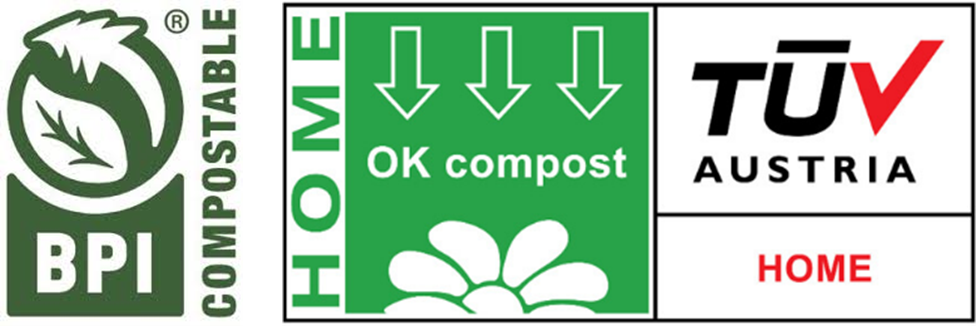
Home Compostable Product is a plastic packaging produced from biodegradable plastic pellets that meet standards. BPI Compostable and TUV Home, which are standards for biodegradability under home composting conditions. It can decompose at temperatures lower than industrial conditions. This product is therefore environmentally friendly and helps facilitate consumers in sustainable organic waste management.
Bio-Based Polyethylene (Bio-PE) Product is a plastic packaging produced from bio-based plastic pellets that meet standards. JORA, utilizing 100% renewable resources from agricultural products such as sugarcane as the primary raw material for ethanol production to replace petroleum. Bio-PE products maintain physical properties equivalent to conventional polyethylene (PE) in terms of strength and recyclability, thereby supporting the circular economy approach. Furthermore, the use of plants as raw materials plays a significant role in carbon sequestration and reducing carbon dioxide (CO 2 ) throughout the product lifecycle.

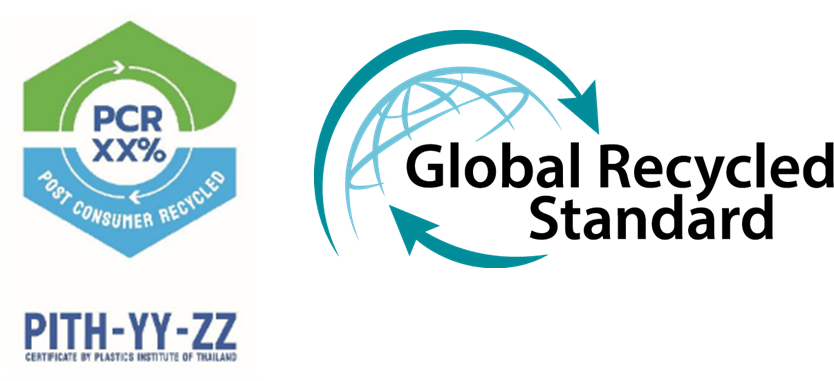
Post-Consumer Recycled (PCR) Product is a plastic packaging produced from post-consumer recycled plastic pellets, and the product is certified according to international standards. Global Recycled Standard (GRS) and certification of PCR Resin blend ratios from the Plastics Institute of Thailand (PITH). The production process covers everything from sourcing post-consumer plastic waste through grinding, washing, and melt-reprocessing with modern technology to obtain recycled raw materials with suitable properties for re-molding. This operation not only helps reduce the use of new resources but also promotes the optimal utilization of resources according to circular economy principles and effectively reduces plastic waste in the environment.
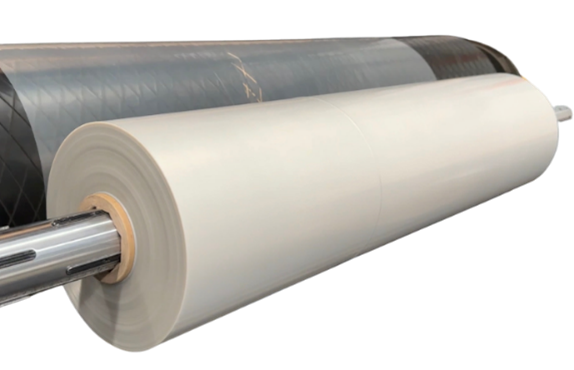
PCR-LLDPE for Non-Food Contact Flexible Packaging The Company has developed innovative films produced from post-consumer recycled plastic pellets, or PCR LLDPE Film for use as a sealant layer in non-food contact flexible packaging. This film possesses outstanding technical properties, including a low seal initiation temperature, which enables highly efficient packaging sealing processes without affecting the physical characteristics of the outer film layer. The development of this product is considered a significant step in expanding the scope of recycled plastic use into complex multi-layer packaging applications.
Post-Consumer Recycled (PCR) Resin The Company is committed to driving the circular economy model through the development of innovative recycled plastic pellets of the type Post-Consumer Recycled (PCR) that undergoes a comprehensive post-consumer plastic waste management process, from systematic sorting to advanced recycling technology processing. The company's PCR recycled plastic pellets have the following key characteristics:
Flexible blending ratios. : The company can produce plastic pellets with PCR recycled plastic content ranging from 30% to 100% by weight, depending on customer requirements and product type.
Property enhancement innovation. : With expertise in material property enhancement and stringent quality control processes, PCR recycled plastic pellets possess stable physical and chemical properties, making them applicable in a wide range of industries.
Enhancing production efficiency. : PCR recycled plastic pellets are designed as a drop-in solution, allowing manufacturers to use them immediately with existing machinery and production processes. This enables efficient maintenance of productivity and management of production costs. Reducing environmental impact: Innovative recycled plastic pellets PCR significantly reduces the consumption of natural resources and greenhouse gas emissions, responding to the global trend among partners and consumers who prioritize environmental responsibility.
Examples of the PCR
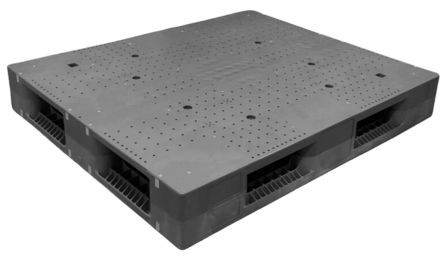
PCR-HDPE for plastic pallet injection molding applications. With appropriate property enhancement techniques, it achieves consistent physical properties and mechanical strength, capable of withstanding impact and bearing loads equivalent to using virgin plastic pellets.
PCR-HDPE for water pipe extrusion applications. Focuses on maintaining critical engineering properties and includes stringent odour and residue removal processes to ensure that products are safe according to usage standards and environmentally friendly.
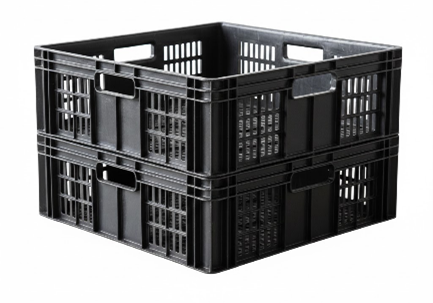
PCR-PE for injection molding of household appliances and transport packaging. such as baskets, bins, or storage containers, which are designed for applications requiring durability and aesthetic appeal alongside environmental care.
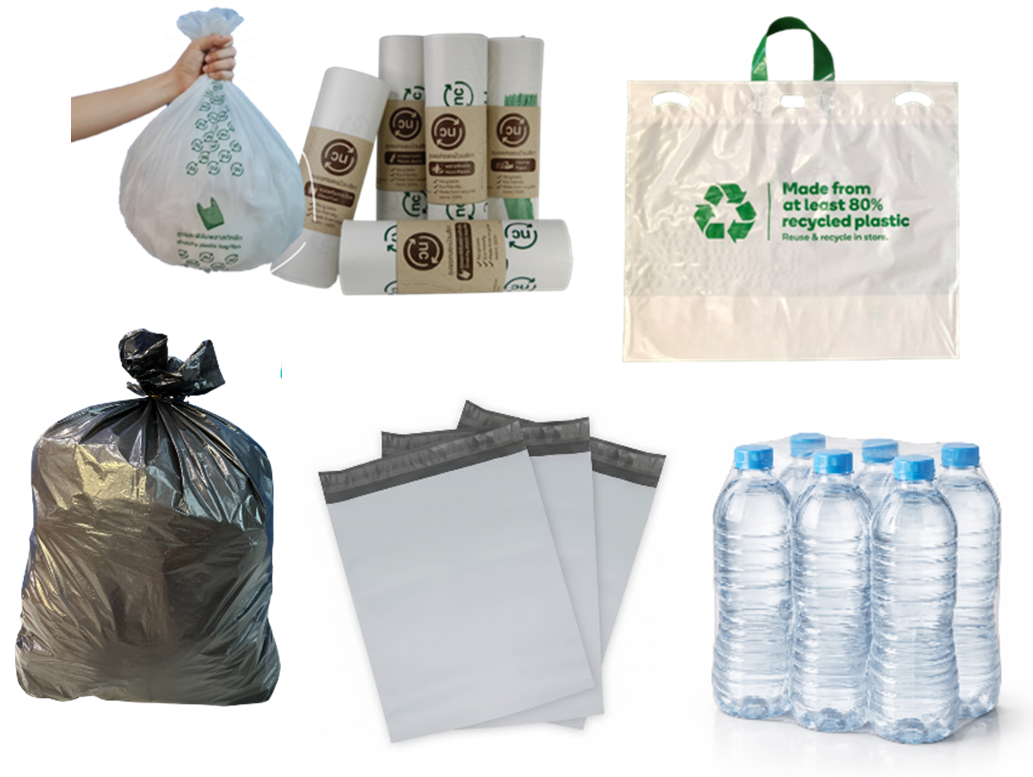
PCR-PE for film blowing applications. Such as garbage bags, thick reusable bags, outer packaging bags, mailer envelopes, and shrink wrap for multi-packs, which are designed with physical properties suitable for the film blowing process, including melt flow index and melt strength, facilitating shape control of the " Bubble" during film blowing is stable and does not break easily, even at high production speeds.
R&D Cost — Label
Research and development (R&D) expenses over the past 3 years (Million Baht)
R&D Cost — This Year
13058.36
R&D Cost — Last Year
13144.87
R&D Cost — 2 Years Ago
9766.79
Assets Used in the Business
Permanent Assets — Description
As of December 31, 2025, the Company had total net book value of fixed assets used in business operations amounting to Baht 1,930,286,000. The majority of these assets were buildings and building improvements, accounting for 34%, and machinery and equipment, accounting for 33% of the total fixed asset value. This reflects the nature of the manufacturing business, which primarily relies on infrastructure and machinery. All assets are owned by the Company, with the exception of vehicles, which are leasehold assets. Significant encumbrances include certain machinery and equipment mortgaged as collateral for loans with financial institutions, valued at Baht 17 million, and outstanding lease obligations for vehicles amounting to Baht 4 million. The Company has a policy to maintain its assets in good working condition and to procure appropriate insurance coverage for key assets to ensure continuous and efficient operations of the Company.
Permanent Assets — Appraisal
| Asset | Ownership | Obligation | Appraisal Value |
|---|---|---|---|
| Land and Land Improvements | Owner | None | 319,514,000 |
| Buildings and Building Improvements | Owner | None | 659,407,000 |
| Machinery and Equipment | Owner | Mortgage registered as collateral for a financial institution for 17 million Baht. | 632,826,000 |
| Office Furniture and Equipment | Owner | None | 18,229,000 |
| Vehicle | Hire-purchase | Vehicle hire-purchase for 4 million Baht | 1,540,000 |
| Right-of-use assets | Owner | None | 88,816,000 |
| Assets under installation and construction | Owner | None | 51,725,000 |
Intangible Assets — Description
The Company recognizes the importance of intangible assets, which play a crucial role in creating a competitive advantage. The Company's intangible assets are acquired through internal development and acquisitions. Investment in information technology systems is a key component of the Company's business strategy, focusing on enhancing operational efficiency, managing customer relationships, and supporting business decision-making. The Company amortizes intangible assets using the straight-line method over their estimated useful lives and reviews the residual value and useful life at the end of each reporting period.
Intangible Assets — Appraisal
| Asset | Type | Appraisal Value |
|---|---|---|
| Computer Software | Software | 3,126,000 |
| Computer software during installation | Software | 16,296,000 |
Has Subsidiaries Investment Policy (Y/N)
Yes
Subsidiaries Investment Policy — Description
The Company has a policy for investment and operational supervision in its subsidiaries, whereby it will invest in businesses that are related, similar, or generate benefits and support the Company's operations, in order to enhance the Company's stability and performance.
It is noted that the subsidiaries in which the Company invests must not be companies where individuals who may have conflicts of interest with the Company, such as directors, executives, or major shareholders, jointly hold shares in the subsidiary exceeding ten percent of the total voting shares of that subsidiary, unless it can be demonstrated that the shareholding structure of such subsidiary is for the best interest of the Company.
Furthermore, in supervising the operations of its subsidiaries, the Company will appoint its representatives, who possess appropriate qualifications and experience relevant to the businesses in which the Company invests, to serve as directors in such subsidiaries. Such representatives may include the Chairman, Chief Executive Officer, directors, senior executives, or any other personnel of the Company who do not have conflicts of interest with the businesses of those subsidiaries. This is to enable the Company to control and oversee the business and operations of its subsidiaries as if they were integral units of the Company. Therefore, the Company stipulates that its representatives must manage the businesses of the subsidiaries in accordance with the regulations and rules set forth in the articles of association and relevant laws governing the operations of those subsidiaries. Moreover, the appointment of representatives to serve as directors in such subsidiaries shall be in proportion to the Company's shareholding and/or based on mutual agreements among the shareholders of those subsidiaries. The Company will closely monitor the financial performance and operational results of its subsidiaries, and ensure that data and accounting records of the subsidiaries are maintained for the Company's inspection.
Marketing Policy & Competition
Reporting Mode
3117
Marketing Policy (Overall)
Key Marketing Policies for Products or Services in the Past Year
The Company operates on a Made to Order production model, focusing on building long-term relationships with both domestic and international customers. The majority are large, reputable clients with long-standing relationships with the company; some have been with the Company for over 10 years, resulting in a stable, consistent revenue base.
The Company's marketing policies are designed to align with its three core operational strategies: expanding business growth, elevating operations to excellence, and conducting business sustainably, in order to create long-term value for customers and all stakeholders.
Target Customer Groups
The Company systematically categorizes target customer groups to balance its customer portfolio and enhance competitiveness, divided into 4 main groups:
Brand Owners
Customer groups requiring high-quality manufacturers with the capability for large-volume production. The Company addresses these needs through continuous improvement in production efficiency and stringent quality control to maintain product standards and consistency.Large Retailers
Customer groups with large-volume orders and a need for flexibility in product modification. The Company develops diverse production capabilities, including an efficient order management system, to accommodate these requirements.Importers and Distributors
The Company focuses on building trust with international partners through products of international quality standards, on-time delivery, and product development that addresses the needs of target markets.Industrial Users
The Company provides a total solution, from design and consultation to the production of packaging that meets the specific needs of each industry.
Key Marketing Approaches
Expanding Customer Base and Business Opportunities
The Company prioritises maintaining relationships with existing customers while expanding its new customer base, especially targeting customer groups that value innovation and sustainability, and expanding business opportunities both domestically and internationally.
Creating Competitive Differentiation
The Company focuses on creating differentiation through product quality, production standards, operational efficiency, and flexibility in product development according to customer requirements.
Creating Sustainable Shared Value
The Company develops and promotes environmentally friendly packaging products, while also collaborating with customers to develop solutions that reduce environmental impact throughout the value chain and continuously communicates its business practices in accordance with ESG principles.
Industry & Competition (Overall)
Analysis of industry conditions and competitive landscape
Status of the plastic packaging industry
By 2025, Thailand's plastic packaging industry is projected to grow continuously, driven by the recovery of the manufacturing sector and Domestic consumption, as well as the continued significant supportive role of the export sector. The industry's growth remains moderate compared to the previous year.
Factors supporting industry growth
Expansion of the food and beverage industry
The food and beverage industry is the primary customer group for the plastic packaging industry, accounting for approximately 40% of total plastic packaging consumption in the country.The recovery of the export sector
The export sector continues to play a crucial role in the industry, particularly in ASEAN markets and other key markets where demand for consumer goods and processed foods is increasing.
Industry trends and development directions
Transition to environmentally friendly packaging
Innovation development to meet consumer behavior
Efficient management of raw material price fluctuations
Competitive landscape of companies within the industry
The plastic packaging industry is highly competitive, requiring operators to develop capabilities in both quality and efficiency. Continuous production and innovation. The company is one of Thailand's competitive plastic packaging manufacturers, stemming from expertise in made-to-order production, development of environmentally friendly products, and obtaining national and international standard certifications enable the company to maintain long-term relationships with major clients and continuously expand business opportunities.
Domestic/Export Sales Ratio (Overall)
| Country | Ratio (%) |
|---|---|
| Thailand | 46 |
Procurement of Products & Services
Reporting Mode
3117
Procurement (Overall)
TPBI Group has continuously improved the efficiency of its machinery and factories. Currently, the factories operate efficiently, possess robust safety systems, and effective pollution prevention systems. Furthermore, there is continuous planning for production improvement, with the production planning department utilizing historical production data for analysis to determine the suitability of machinery for each product and to plan
production by specifying machinery and raw material types to ensure continuity, thereby reducing production losses and shortening production lead times, in order to consistently meet evolving market demands.
1. Plastic Bag and Film Production Plant (Consumables) Currently, the group of companies operates factories producing plastic bags and film packaging, with a combined maximum production capacity exceeding 60,000 tons per year, as detailed below:
• Sam Phran Factory, located in Sam Phran District, Nakhon Pathom Province, focuses on film production.
• Rayong Factory, located in Nikhom Phatthana District, Rayong Province, produces plastic bags, garbage bags, and film. The location of the Rayong factory is near Map Ta Phut Port and Laem Chabang Port, which facilitates exports. Therefore, this factory focuses on mass production for export to major customers worldwide.
2. Flexible Plastic Packaging Production Plant for Consumer Goods (Flexibles) Operated by an affiliated company, which is a subsidiary located in Sam Phran District, Nakhon Pathom Province, with a production capacity of approximately 150 million printed meters per year.
3. Paper Packaging Production Plant (Paper) Operations are divided into two parts: a subsidiary producing paper bowls and paper cups, located in Sam Phran District, Nakhon Pathom Province, and a subsidiary producing paper bags, located in England, with a combined production capacity exceeding 800 million units per year.
Raw Material Acquisition (Overall)
The main raw materials used in the production of plastic bags and films include various types of virgin plastic pellets procured from both domestic and international manufacturers.
recycled plastic pellets, which the group entirely produces itself, and printing inks for patterned plastic bags, which are procured domestically. For the production of flexible plastic packaging for consumer goods, the main raw materials used include various types of films, printing inks, and adhesives. The procurement details for each type of raw material are as follows:
1. Virgin plastic pellets is polyethylene plastic pellets. The types of polyethylene plastic pellets used by the company can be divided into 3 main categories: High-Density Polyethylene (HDPE), Low-Density Polyethylene (LDPE), and Linear Low-Density Polyethylene (LLDPE). Currently, the company procures these plastic pellets from over 10 domestic and international manufacturers, which has ensured that the group has not experienced any shortage of new plastic pellet raw materials to date.
2. Recycled plastic pellets and post-consumer plastic waste The company procures plastic pellets and post-consumer plastic waste from
consumers, from both domestic and international partners, including the "Worn Project," to meet customer demands and to respond to the trend of environmentally friendly packaging.
3. Films which are used in the production of flexible plastic packaging for consumer goods. These are procured from more than 3 manufacturing partners and more than 5 distributors to prevent raw material shortages. Examples include films made from Biaxially Oriented Polypropylene (BOPP) plastic pellets, films made from Polyester (PET) plastic pellets, Aluminium Foil, Nylon film, etc.
4. Paper The company will source partners both domestically and internationally to compare prices and quality to ensure suitability and meet customer requirements. Furthermore, it has a risk management policy of having at least 3 partners for purchasing decisions.
5. Printing inks, adhesives, and others such as printing inks, adhesives, oils, packaging boxes, and stickers. The company will source suitable partners by comparing prices and quality among approximately 4 suppliers before making a purchasing decision. Most of these purchases are made from domestic partners.
Production Capacity (Overall)
| Item | Unit | Used | Capacity |
|---|---|---|---|
| Plastic Bag and Film Manufacturing Plant | Ton | 61 | 6,000 |
| Manufacturing plant for flexible plastic packaging for consumer goods | Meter | 70 | 150,000,000 |
| Paper Packaging Manufacturing Plant | Piece | 28 | 800,000,000 |
Domestic/Overseas Purchase Proportion (Overall)
| Raw Material | Source Country | Value |
|---|---|---|
| Plastic pellets | Singapore | 110,000,000 |
| Plastic pellets | Thailand | 1,140,000,000 |
| Printing Ink | Thailand | 35,000,000 |
| Paper Box | Thailand | 150,000,000 |
Projects Under Construction
Has Projects Under Construction (Y/N)
No
Debentures & Bills of Exchange
Has Debentures (Y/N)
No
Convertible Securities
Has Convertible Securities (Y/N)
No